
Advancing a Human Rights-Based Approach to Biodiversity and Climate Action
Launch of the Inclusive Conversations Report

Advancing a Human Rights-Based Approach to Biodiversity and Climate Action
Launch of the Inclusive Conversations Report

Photo by Dư Trần Khánh on Pexels
Photo by Dư Trần Khánh on Pexels
As global attention turned to the role of Indigenous Peoples and local communities in biodiversity governance,
a key event took place on 25 October 2025 in Panama City, Panama, at the margins of the first meeting of the Subsidiary Body on Article 8(j) and Other Provisions of the Convention on Biological Diversity Related to Indigenous Peoples and Local Communities (SB8J-1).
The SB8J-1 marked a historic step following the decision at the 16th Conference of the Parties to the Convention on Biological Diversity (CBD COP16) to establish a permanent subsidiary body dedicated to matters concerning Indigenous Peoples and local communities. The new body’s focus includes priorities such as conservation and restoration, sustainable use, knowledge and culture, benefit-sharing, participation and the weaving of a human rights-based approach (HRBA) into biodiversity policy and practice.
As global attention turned to the role of Indigenous Peoples and local communities in biodiversity governance, a key event took place on 25 October 2025 in Panama City, Panama, at the margins of the first meeting of the Subsidiary Body on Article 8(j) and Other Provisions of the Convention on Biological Diversity Related to Indigenous Peoples and Local Communities (SB8J-1).
The SB8J-1 marked a historic step following the decision at the 16th Conference of the Parties to the Convention on Biological Diversity (CBD COP16) to establish a permanent subsidiary body dedicated to matters concerning Indigenous Peoples and local communities. The new body’s focus includes priorities such as conservation and restoration, sustainable use, knowledge and culture, benefit-sharing, participation and the weaving of a human rights-based approach (HRBA) into biodiversity policy and practice.

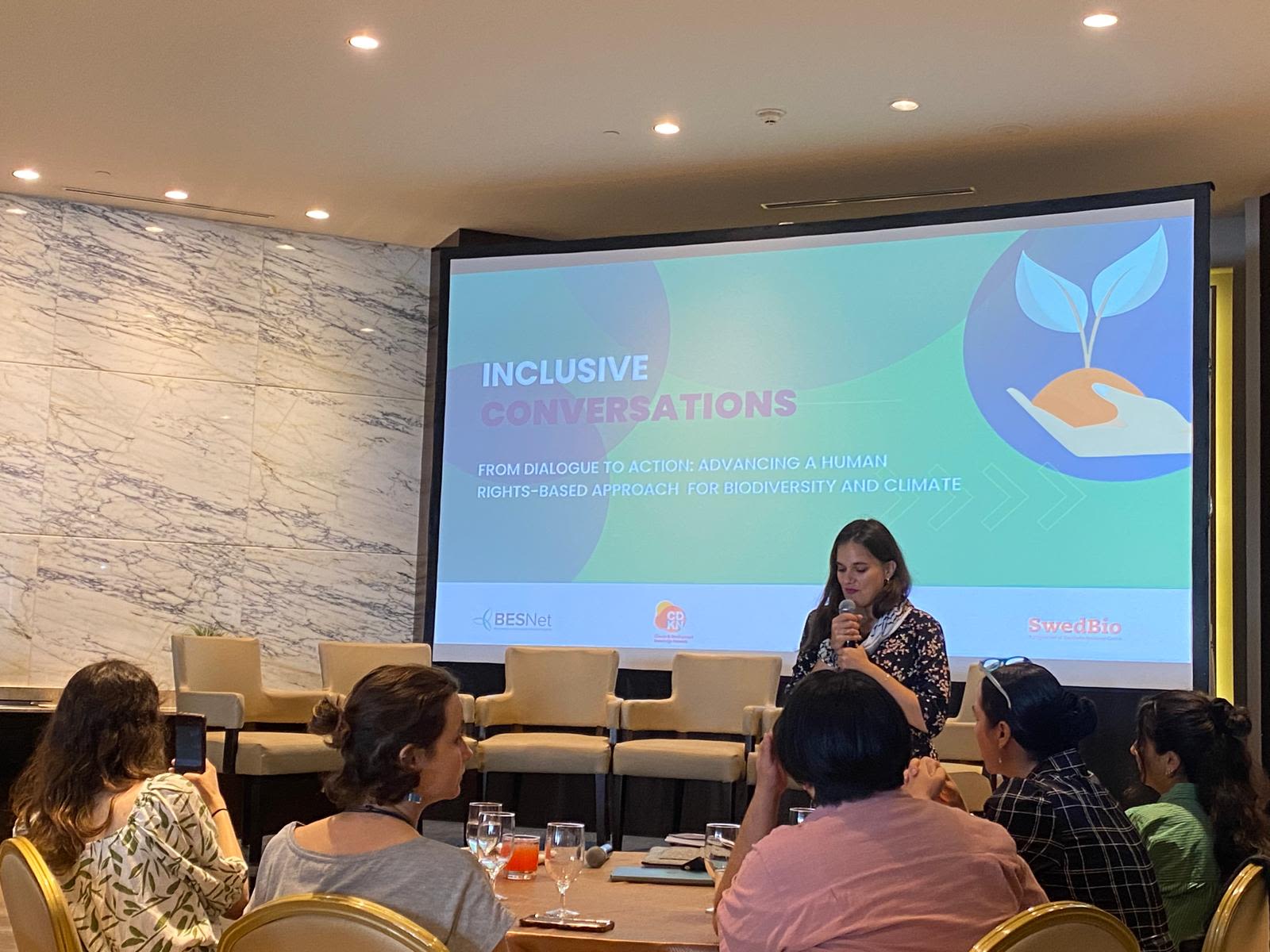

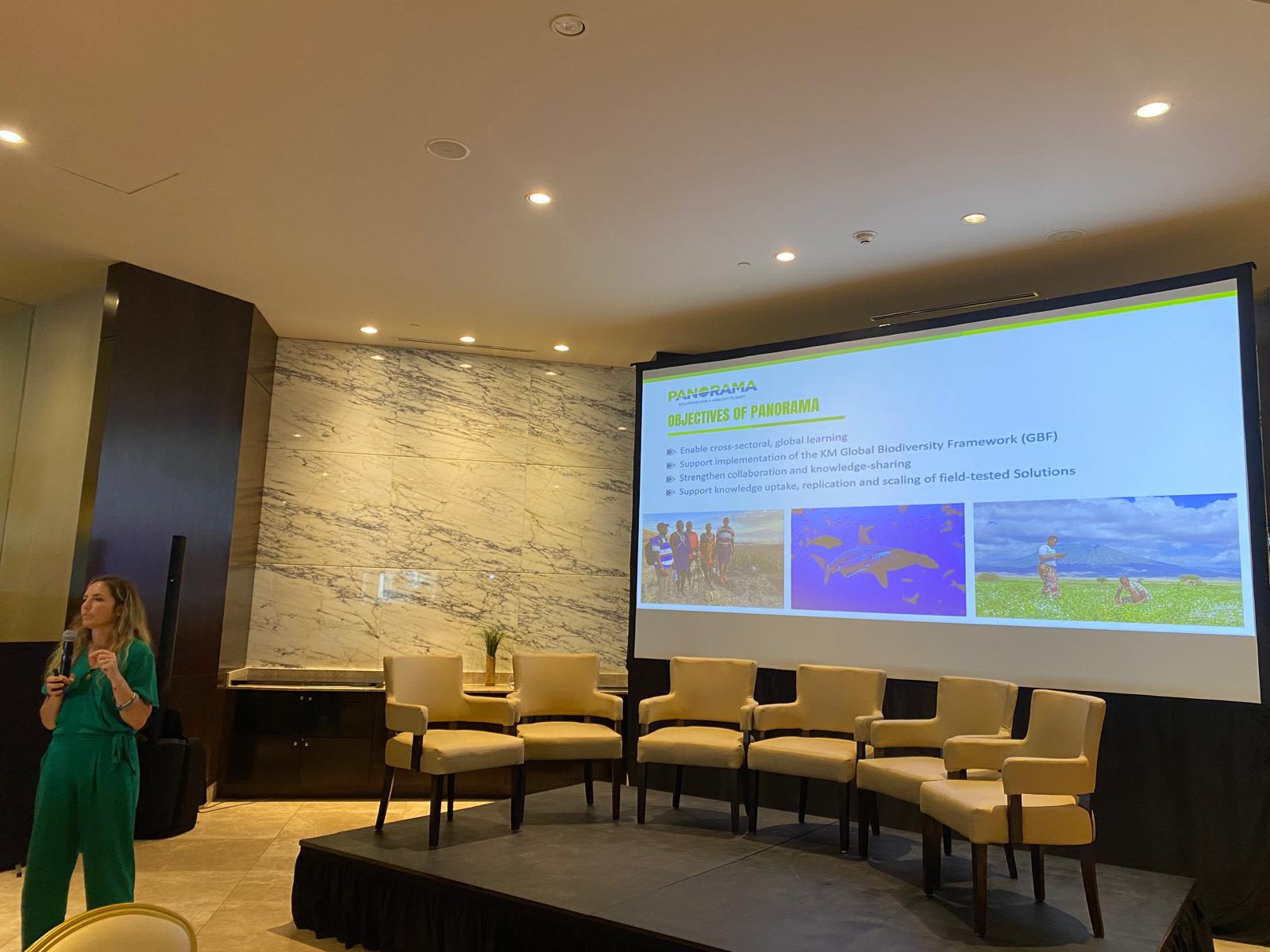

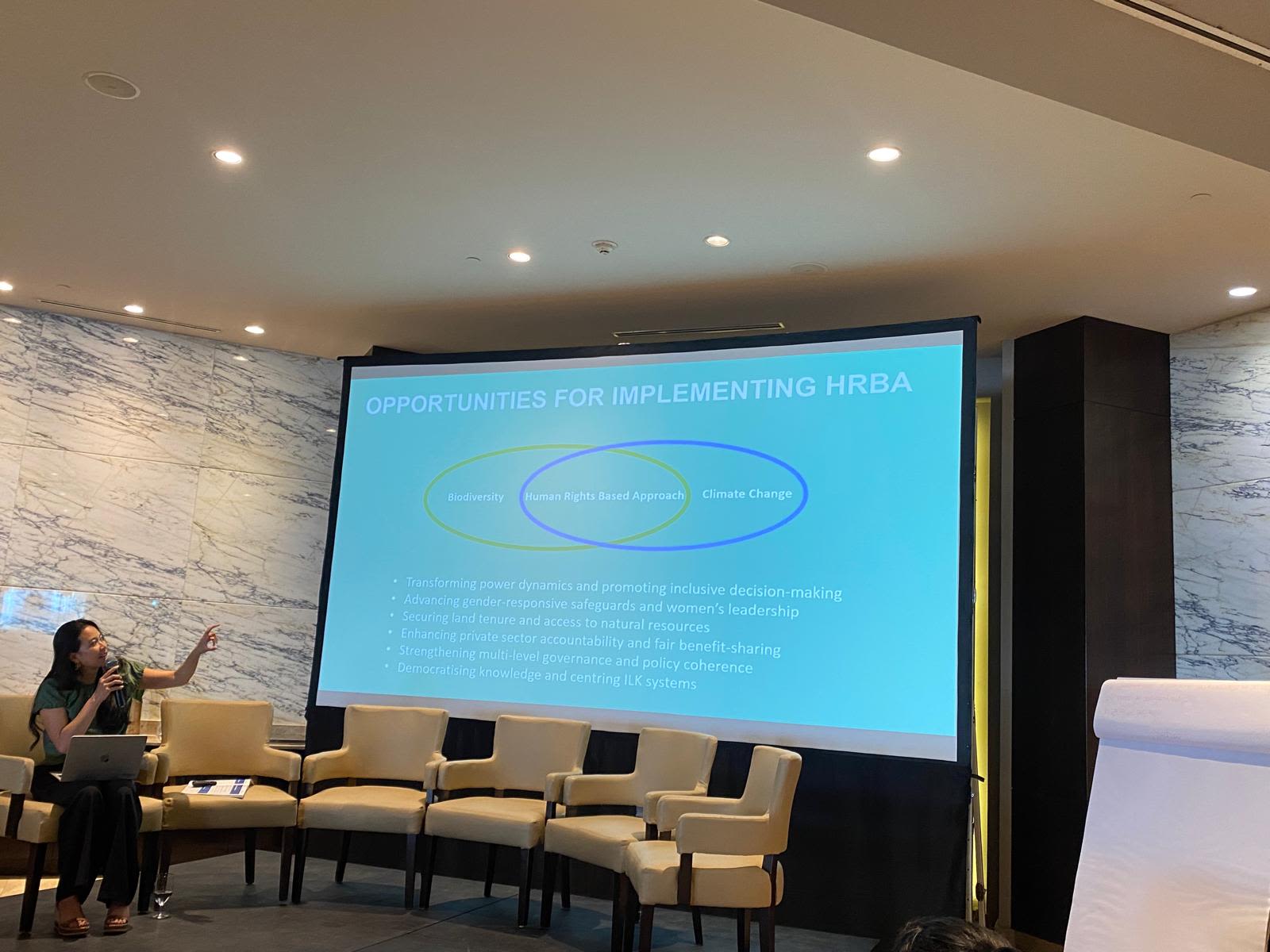
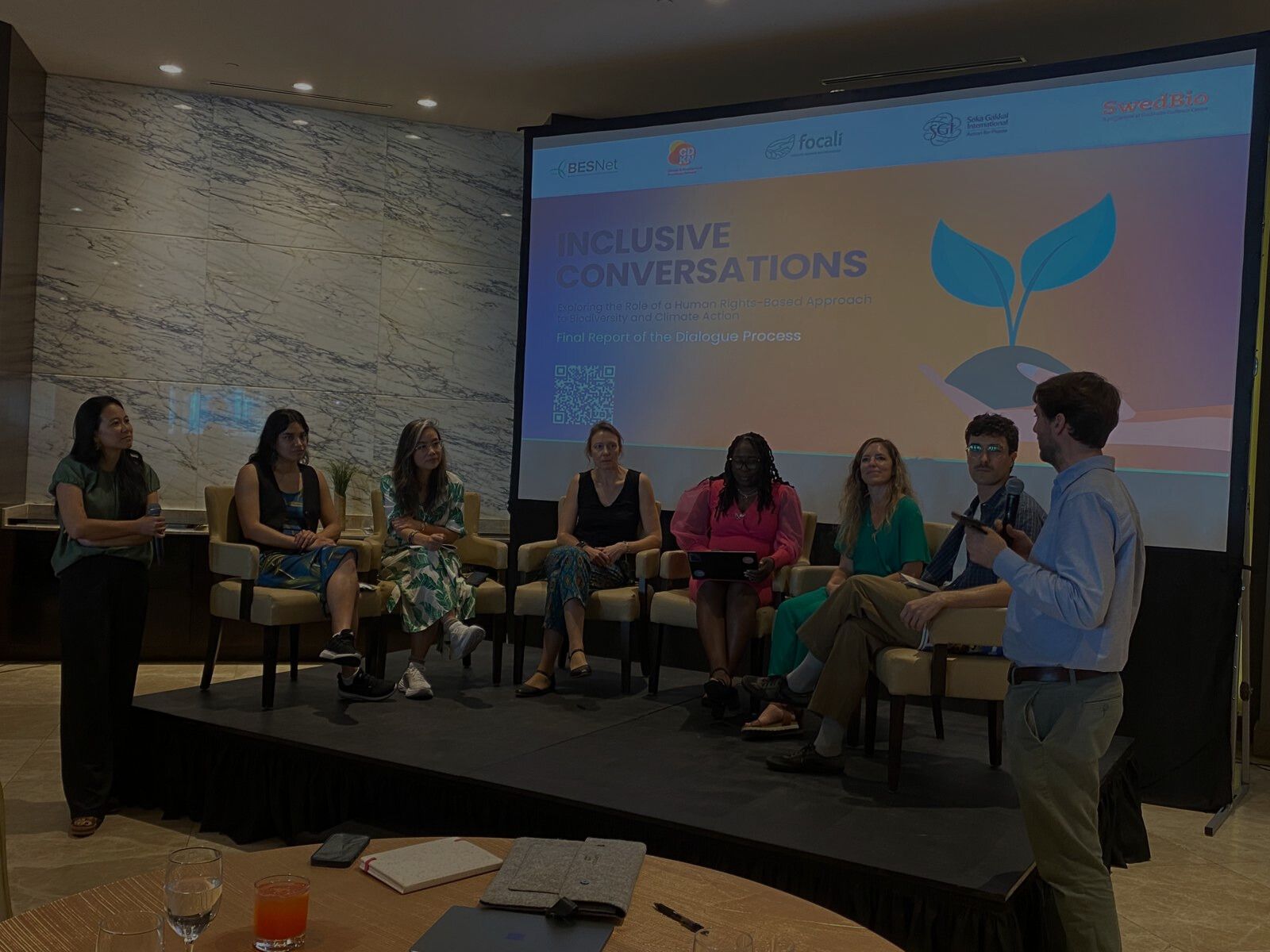
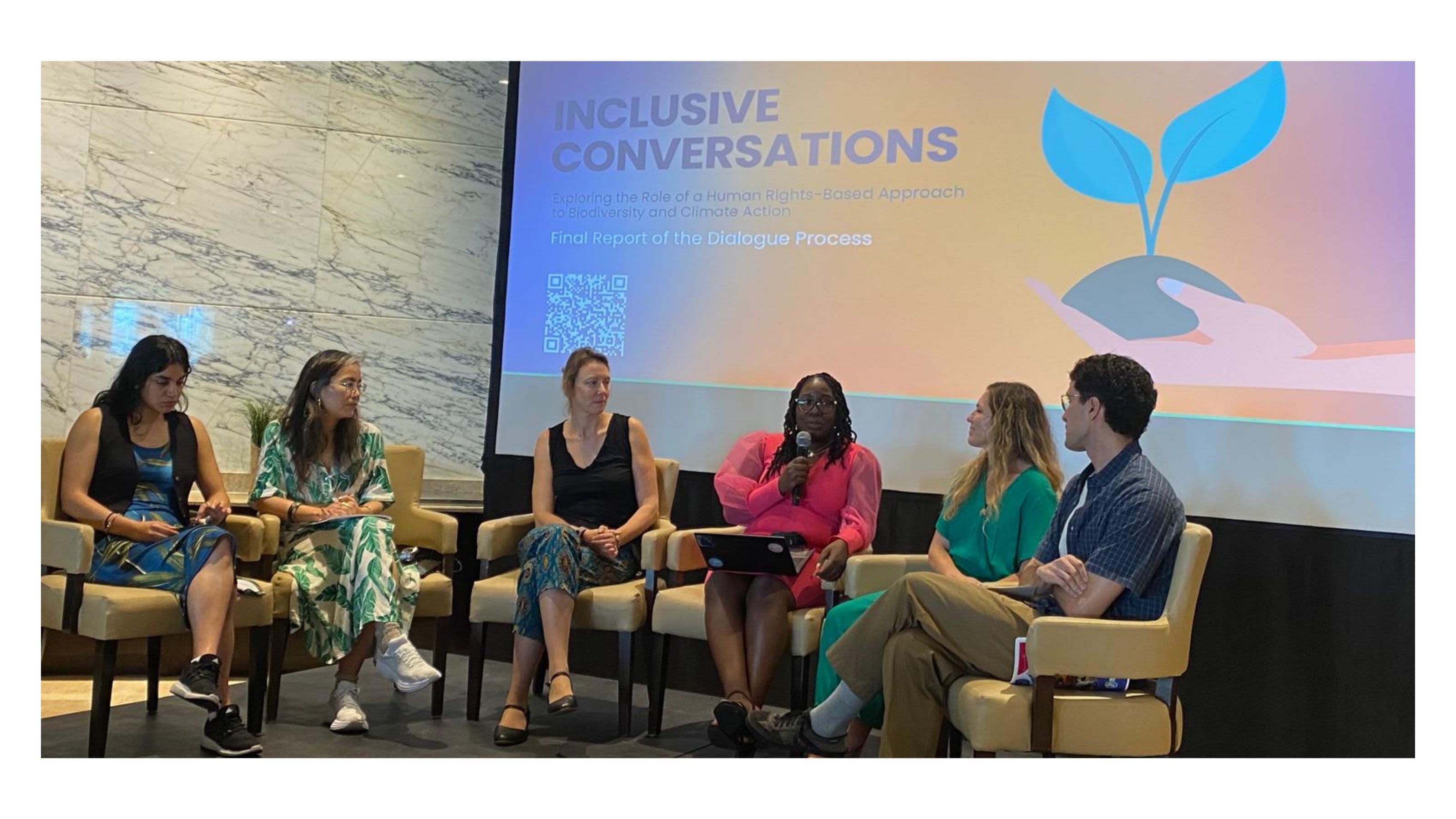
Building on this momentum, the event “Inclusive Conversations: From Dialogue to Action – Advancing a Human Rights-Based Approach for Biodiversity and Climate” brought together policymakers, researchers, Indigenous representatives and civil society members to share experiences and chart a way forward.
The event marked the culmination of a two-year global Multi-Actor Dialogue Process co-convened by SwedBio, Soka Gakkai International, the Climate and Development Knowledge Network and the Biodiversity and Ecosystem Services Network (BES-Net), with support from the Office of the United Nations High Commissioner for Human Rights and the CBD Secretariat. At its centre is the launch of the “Inclusive Conversations” report, capturing key lessons, reflections and actionable recommendations that have emerged from the face-to-face and virtual dialogue series on applying a HRBA to biodiversity and climate action.

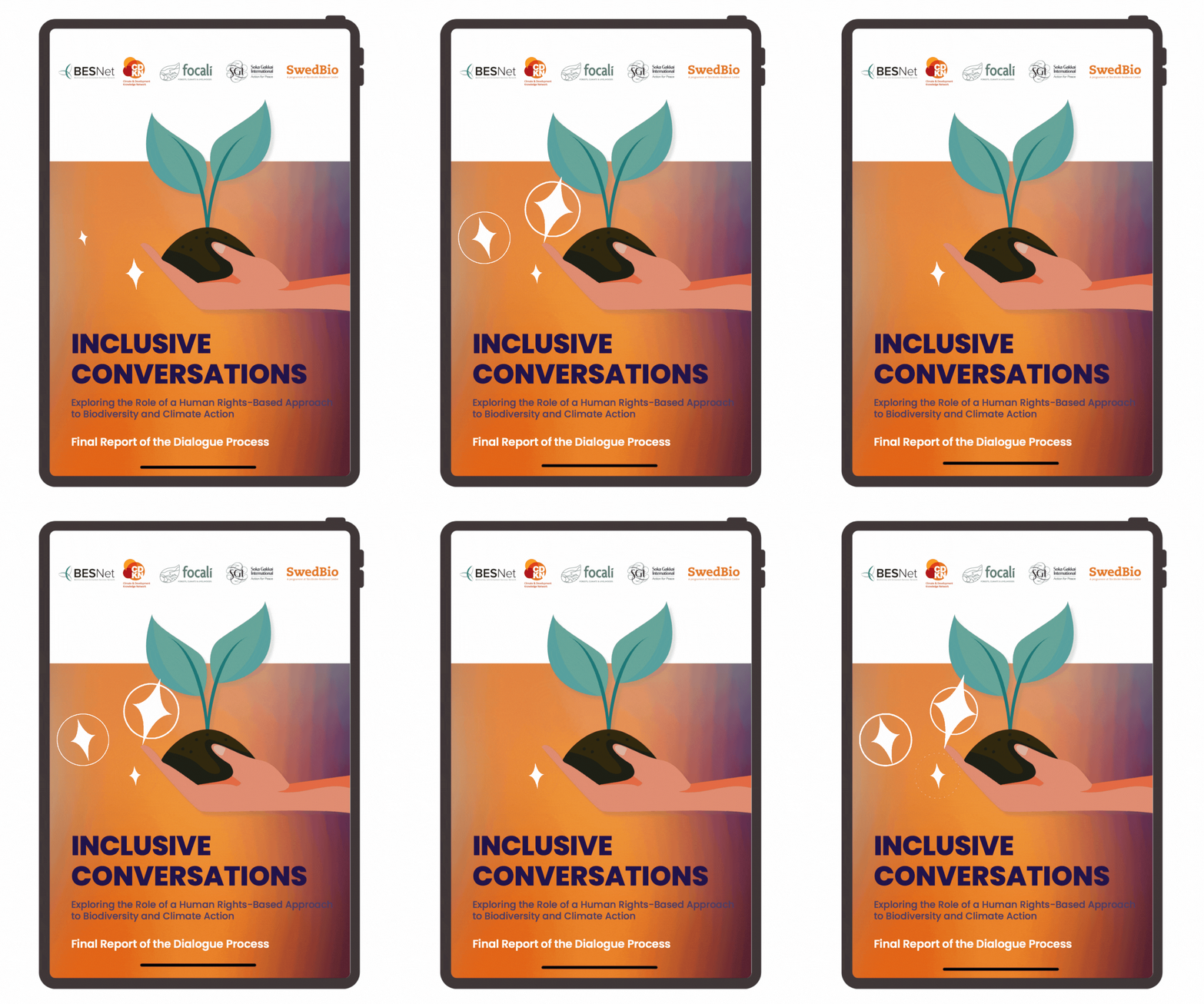
Building on this momentum, the event “Inclusive Conversations: From Dialogue to Action – Advancing a Human Rights-Based Approach for Biodiversity and Climate” brought together policymakers, researchers, Indigenous representatives and civil society members to share experiences and chart a way forward.
The event marked the culmination of a two-year global Multi-Actor Dialogue Process co-convened by SwedBio, Soka Gakkai International, the Climate and Development Knowledge Network and the Biodiversity and Ecosystem Services Network (BES-Net), with support from the Office of the United Nations High Commissioner for Human Rights and the CBD Secretariat. At its centre is the launch of the “Inclusive Conversations” report, capturing key lessons, reflections and actionable recommendations that have emerged from the face-to-face and virtual dialogue series on applying a HRBA to biodiversity and climate action.
Tracing the Dialogue Process
The Dialogue Process began in 2024 with the purpose of exploring what it means in practice to apply an HRBA to biodiversity and climate action. It brought together members and representatives of Indigenous Peoples and local communities, women, youth, small-scale farmers and fishers, civil society organizations, researchers and governments, each contributing their perspectives, lived experiences, beliefs and worldviews:
19–20 June 2024
Nairobi, Kenya
Centring Indigenous voices, local communities, women and youth
3 June 2024
Bonn, Germany
Engaging representatives from Member States of the United Nations Framework Convention on Climate Change (UNFCCC)
16 June 2024
Oxford, United Kingdom
Bringing together international non-governmental organizations and researchers
August 2024
Online sessions
Gathering UNFCCC and CBD member states (two sessions) and all the other actors (two sessions) who could not attend the in-person workshops
October 2024
Cali, Colombia

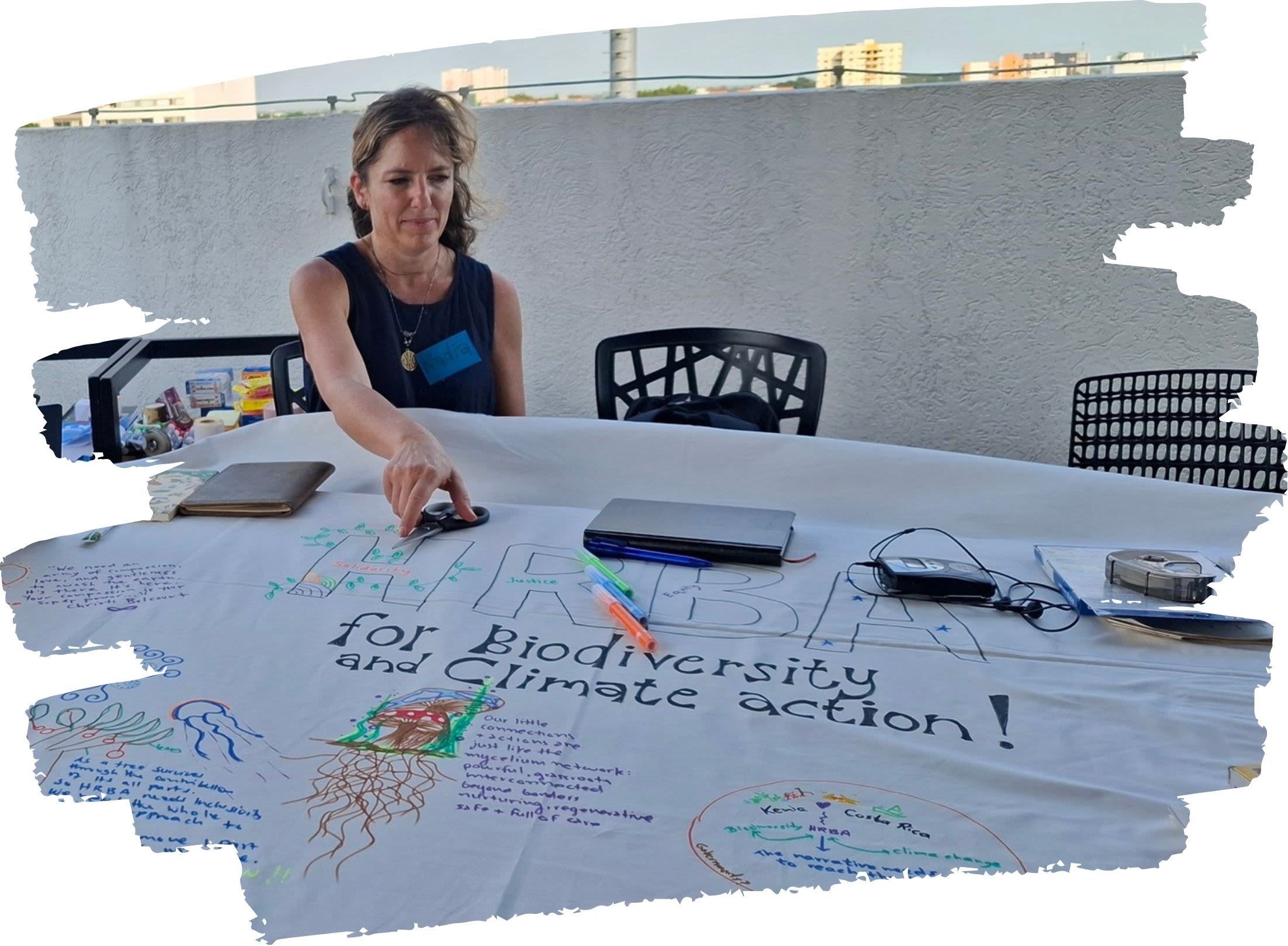
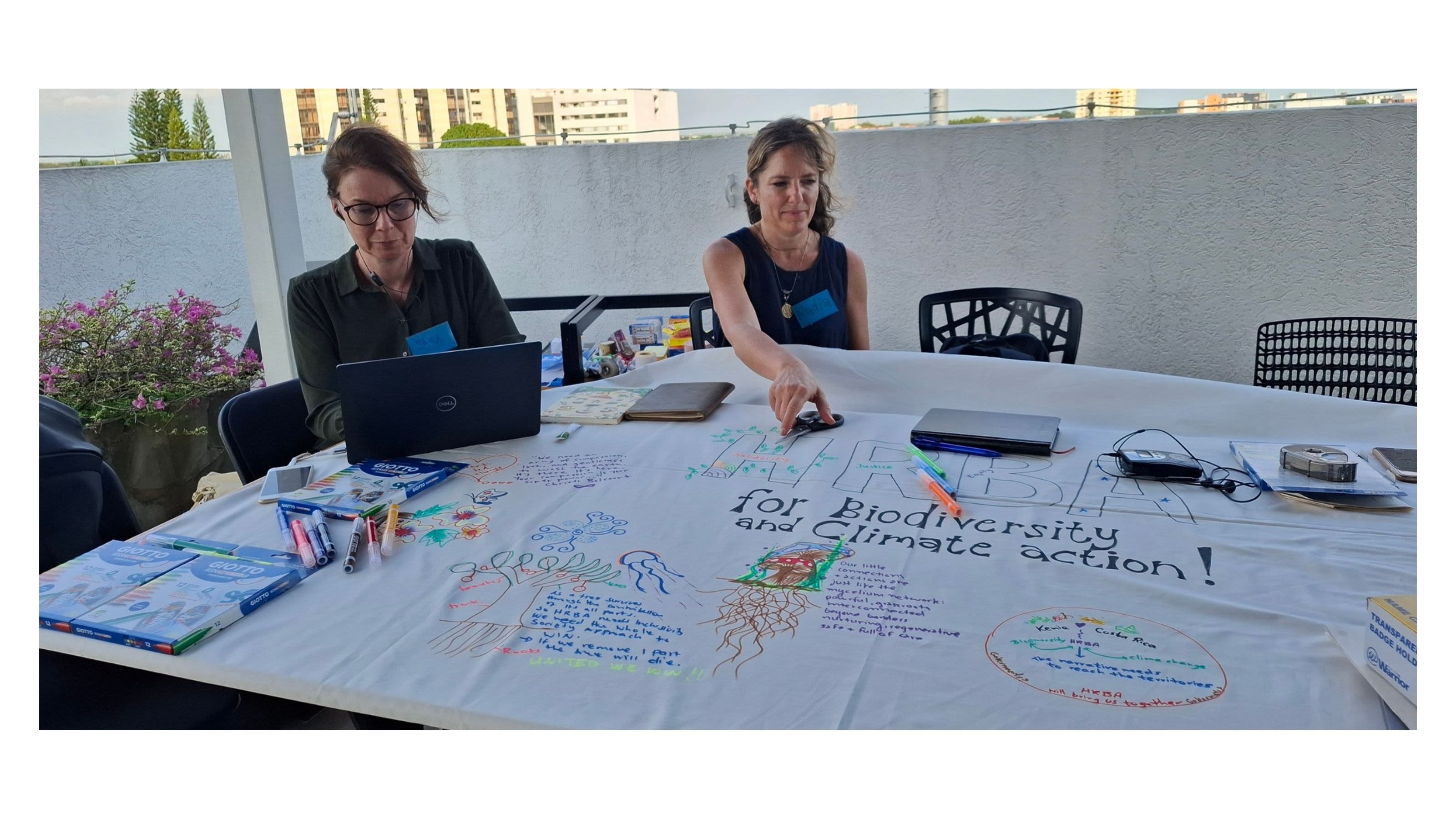
A defining moment in this journey took place in October 2024, during the Multi-Actor Dialogue in Cali, Colombia, organized on the margins of CBD COP16. The event gathered participants from across regions to consolidate the early outcomes of the Dialogue Process and develop shared recommendations. Discussions in Cali reaffirmed a core understanding that has guided the process ever since: biodiversity loss, climate change and inequality are deeply intertwined with human rights challenges, which cannot be separated or tackled in isolation.
Expanding Participation and Regional Exchange
Building on the Cali discussions, a second phase of the Dialogue Process in 2025 deepened the exchange and broadened participation to foster listening, collaboration and co-creation:
Cape Town, South Africa (29–30 May 2025) – connecting subnational governments and practitioners
New York, United States of America (22 and 24 September 2025) – targeting the participants of the Climate Week NYC 2025
Together, these dialogues offered space for further reflection and synthesis of insights from across regions and shaped the collective vision captured in the “Inclusive Conversations” report launched in Panama.
Tracing the Dialogue Process
The Dialogue Process began in 2024 with the purpose of exploring what it means in practice to apply an HRBA to biodiversity and climate action. It brought together members and representatives of Indigenous Peoples and local communities, women, youth, small-scale farmers and fishers, civil society organizations, researchers and governments, each contributing their perspectives, lived experiences, beliefs and worldviews:

Nairobi, Kenya
(19–20 June 2024)
Centring Indigenous voices, local communities, women and youth
Bonn, Germany
(3 June 2024)
Engaging representatives from Member States of the United Nations Framework Convention on Climate Change (UNFCCC)
Oxford, United Kingdom
(16 June 2024)
Bringing together international non-governmental organizations and researchers
Online sessions
(August 2024)
Gathering UNFCCC and CBD member states (two sessions) and all the other actors (two sessions) who could not attend the in-person workshops
A defining moment in this journey took place in October 2024, during the Multi-Actor Dialogue in Cali, Colombia, organized on the margins of CBD COP16. The event gathered participants from across regions to consolidate the early outcomes of the Dialogue Process and develop shared recommendations. Discussions in Cali reaffirmed a core understanding that has guided the process ever since: biodiversity loss, climate change and inequality are deeply intertwined with human rights challenges, which cannot be separated or tackled in isolation.

Findings and Recommendations of the Report
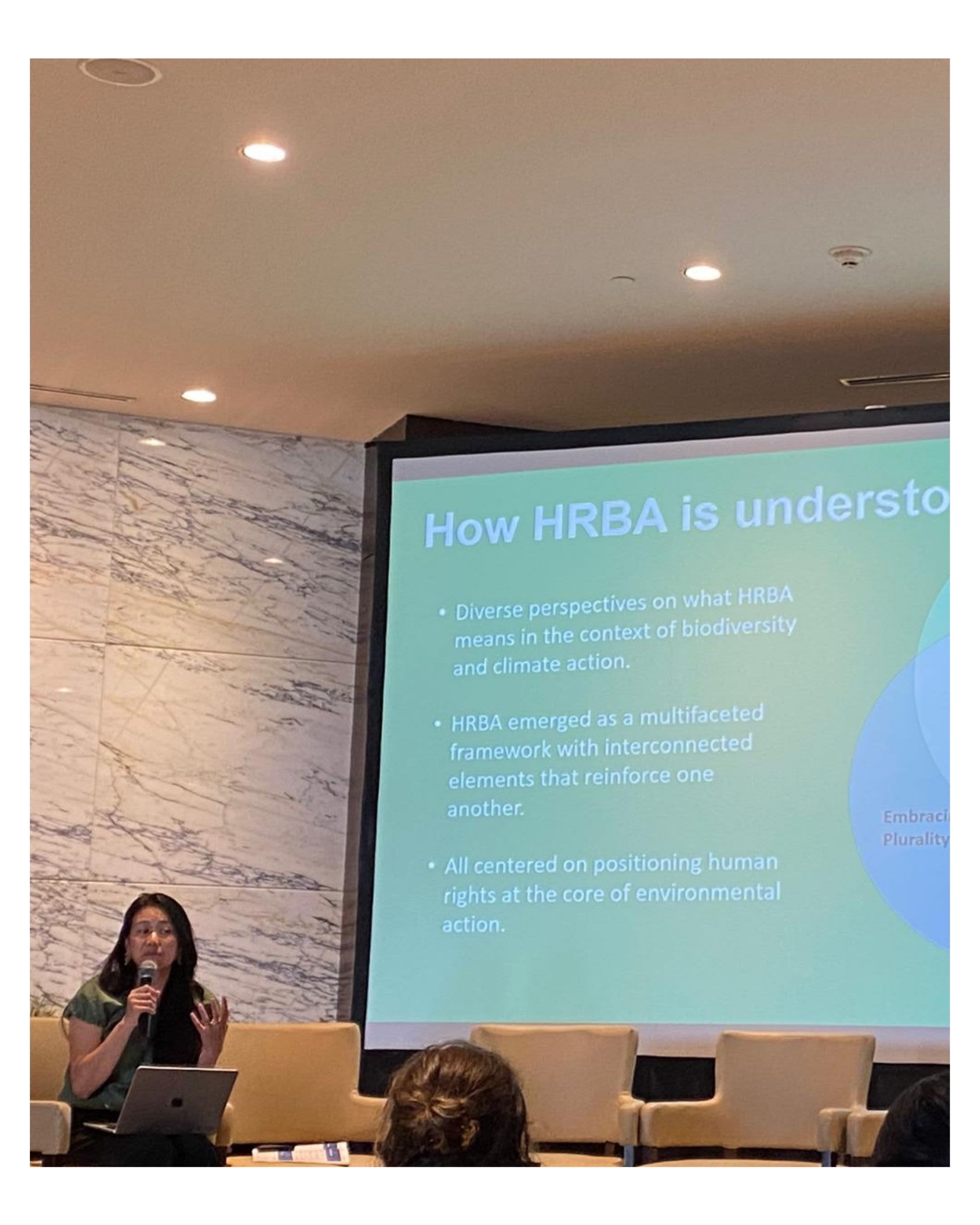
The report captures the key outcomes of this Multi-Actor Dialogue Process. It documents the lived experiences and perspectives of those who are often most affected by environmental change, yet least heard in policy discussions: Indigenous Peoples, women, youth and marginalized communities.
While global frameworks such as the Kunming–Montreal Global Biodiversity Framework and the Paris Agreement acknowledge human rights, participants emphasized that implementation is sometimes disconnected from people’s realities, as policies often prioritize numbers, projects or markets over the rights and agency of communities.
The report calls for a fundamental shift from commitments on paper to practical, inclusive pathways that uphold human dignity. Its recommendations include:
Findings and Recommendations of the Report

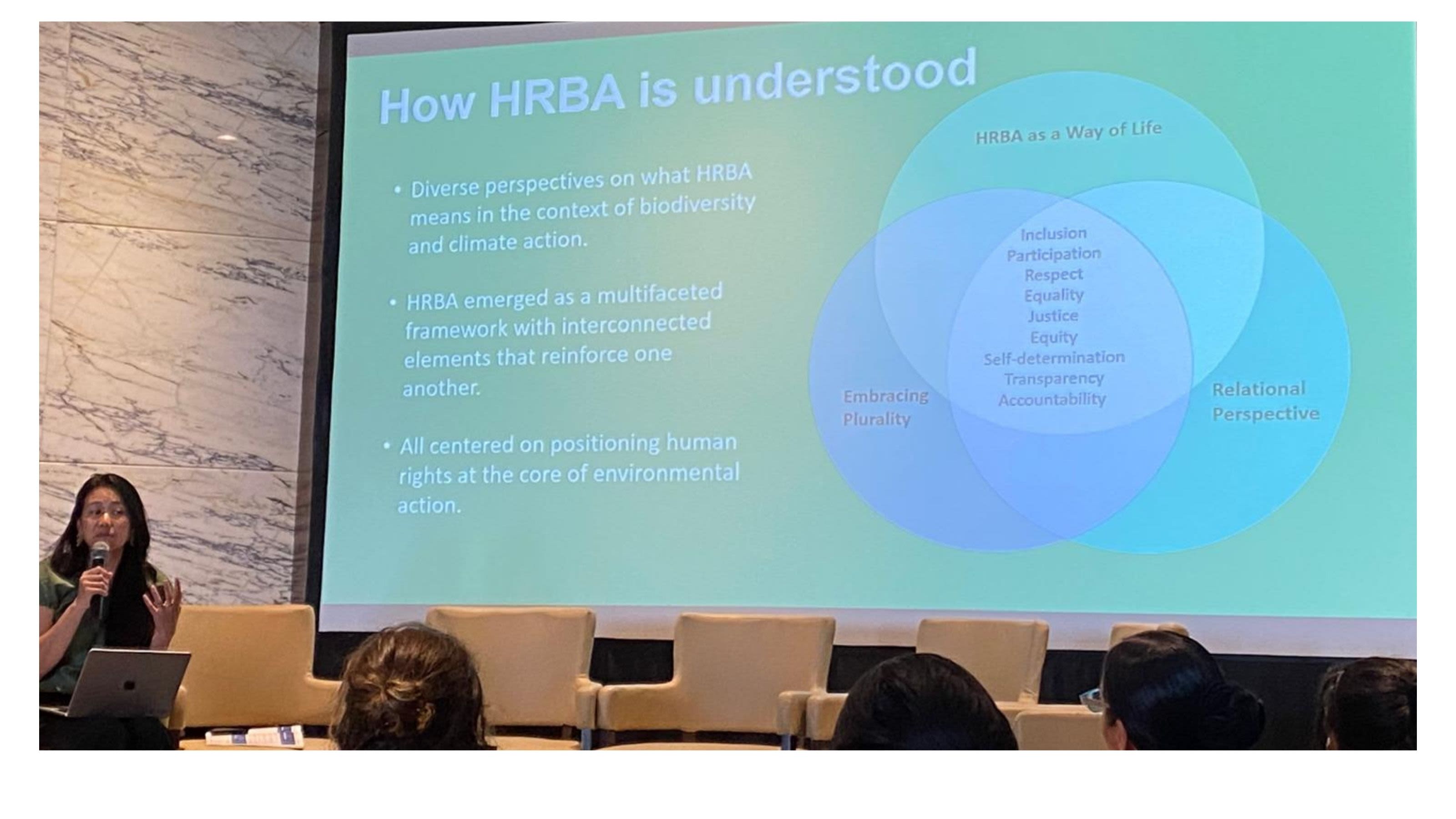
The report captures the key outcomes of this Multi-Actor Dialogue Process. It documents the lived experiences and perspectives of those who are often most affected by environmental change, yet least heard in policy discussions: Indigenous Peoples, women, youth and marginalized communities.
While global frameworks such as the Kunming–Montreal Global Biodiversity Framework and the Paris Agreement acknowledge human rights, participants emphasized that implementation is sometimes disconnected from people’s realities, as policies often prioritize numbers, projects or markets over the rights and agency of communities.
The report calls for a fundamental shift from commitments on paper to practical, inclusive pathways that uphold human dignity. Its recommendations include:
Recognizing HRBA as a moral and legal foundation for achieving biodiversity and climate goals;
Embedding equity and intergenerational justice into all decisions and actions;
Interweaving traditional knowledge, values and collective rights into national and sub-national policies;
Addressing structural inequalities that limit participation and access to resources; and
Strengthening collaboration and trust among rights-holders and duty-bearers.
The report aligns with findings from recent assessments published by the Intergovernmental Platform on Biodiversity and Ecosystem Services and the Intergovernmental Panel on Climate Change, which highlight that effective climate and biodiversity policies must be rooted in justice, inclusion and respect for human rights. By weaving together science, policy and community knowledge, the Multi-Actor Dialogue Process has offered a model for how that can happen in practice.






Recognizing HRBA as a moral and legal foundation for achieving biodiversity and climate goals
Embedding equity and intergenerational justice into all decisions and actions
Interweaving
traditional knowledge, values and
collective rights into national
and sub-national
policies
Addressing structural inequalities that limit participation and access to resources
Strengthening collaboration and trust among rights-holders and duty-bearers
The report aligns with findings from recent assessments published by the Intergovernmental Platform on Biodiversity and Ecosystem Services and the Intergovernmental Panel on Climate Change, which highlight that effective climate and biodiversity policies must be rooted in justice, inclusion and respect for human rights. By weaving together science, policy and community knowledge, the Multi-Actor Dialogue Process has offered a model for how that can happen in practice.
“There can be no effective biodiversity or climate action without the full respect, protection and fulfilment of human rights.”

Opening Remarks from BES-Net and UNESCO
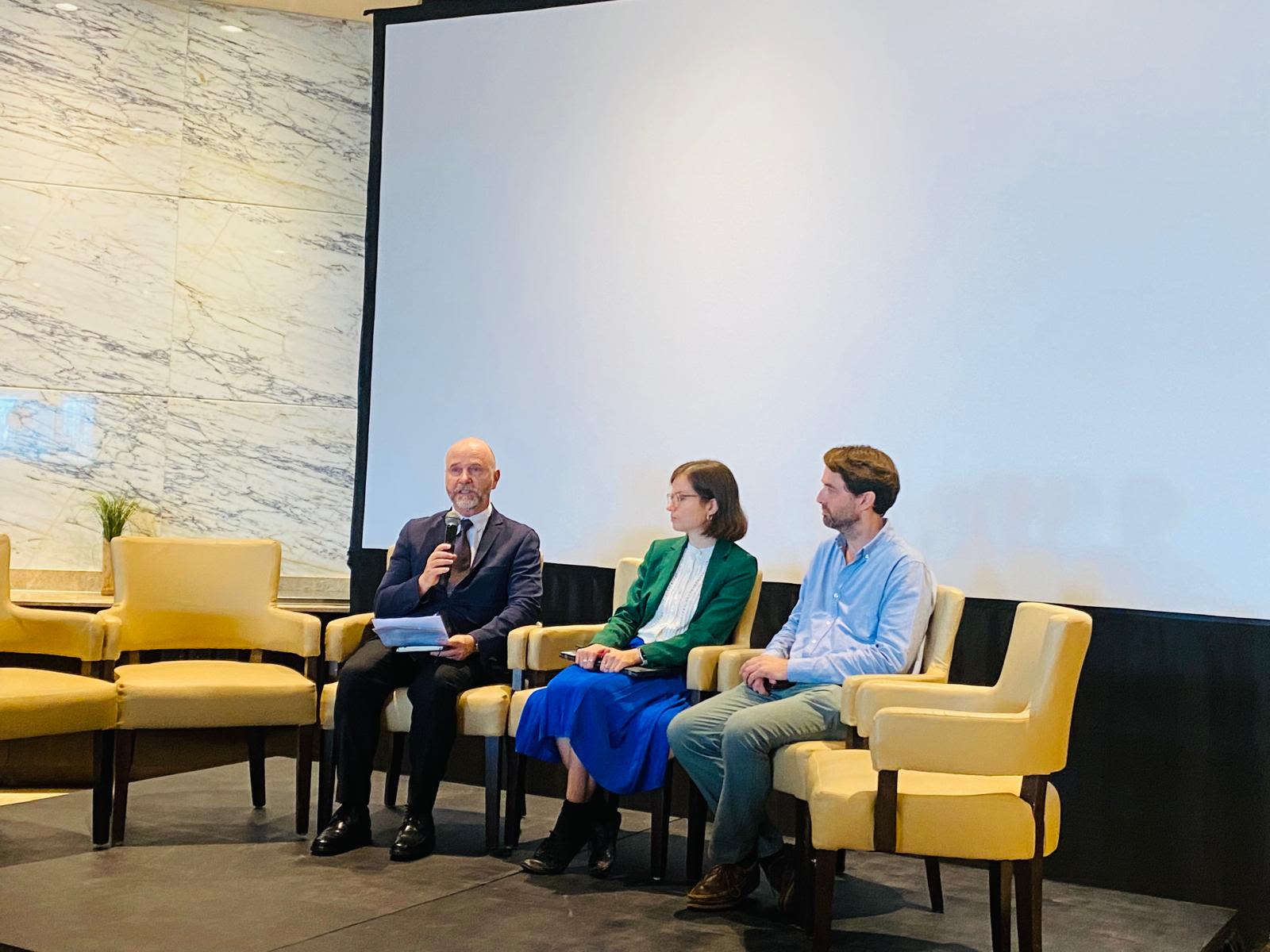
Delivering opening remarks at the Panama event, Mr Nigel Crawhall, Chief of the Local and Indigenous Knowledge Systems Section at the United Nations Educational, Scientific and Cultural Organization, speaking on behalf of BES-Net, reflected on the journey that led to this milestone: “There can be no effective biodiversity or climate action without the full respect, protection and fulfilment of human rights. Now, the time has come to translate learning into concrete action – to ensure that rights-holders are not only heard but heeded; not only consulted but empowered; not only included but placed at the heart of decision-making.”
Mr Crawhall emphasized BES-Net’s ongoing commitment to advancing HRBA through awareness-raising, capacity-building and knowledge co-creation. He also highlighted the development of HRBA compendium case studies in Colombia and Malawi, undertaken in partnership with SwedBio, to document how rights-based approaches are already shaping biodiversity and climate decisions at national and local levels.
A Continuing Effort
The Panama event serves both as a reflection on what has been achieved and a call to continue this collective effort. By placing human rights at the heart of biodiversity and climate action, the dialogue process has helped chart a path toward policies and practices that are effective, inclusive and grounded in dignity and shared responsibility.
Opening Remarks from BES-Net and UNESCO
Delivering opening remarks at the Panama event, Mr Nigel Crawhall, Chief of the Local and Indigenous Knowledge Systems Section at the United Nations Educational, Scientific and Cultural Organization, speaking on behalf of BES-Net, reflected on the journey that led to this milestone: “There can be no effective biodiversity or climate action without the full respect, protection and fulfilment of human rights. Now, the time has come to translate learning into concrete action – to ensure that rights-holders are not only heard but heeded; not only consulted but empowered; not only included but placed at the heart of decision-making.”
Mr Crawhall emphasized BES-Net’s ongoing commitment to advancing HRBA through awareness-raising, capacity-building and knowledge co-creation. He also highlighted the development of HRBA compendium case studies in Colombia and Malawi, undertaken in partnership with SwedBio, to document how rights-based approaches are already shaping biodiversity and climate decisions at national and local levels.
A Continuing Effort
The Panama event serves both as a reflection on what has been achieved and a call to continue this collective effort. By placing human rights at the heart of biodiversity and climate action, the dialogue process has helped chart a path toward policies and practices that are effective, inclusive and grounded in dignity and shared responsibility.
 Built with Shorthand