The pollen morphology of dragon’s blood rattans (daemonorops spp.) From sumatra Dragon’s blood rattans (Daemonorops spp.) or locally known...
Life cycle assessment of honey: Considering the pollination service Life Cycle Assessment (LCA) has been increasingly used for t...
Transcriptomic analysis reveals a comprehensive calcium- and phytohormone-dominated signaling response in leymus chinensis self-incompatibility Sheepgrass (Leymus Chinensis(Trin.) Tzvel.) is an economical...
Nectary size is a pollination syndrome trait in Penstemon Evolution of complex phenotypes depends on the adaptive impo...
Plant–pollinator networks in grassland working landscapes reveal seasonal shifts in network structure and composition Declines in native bee populations can limit pollination ser...
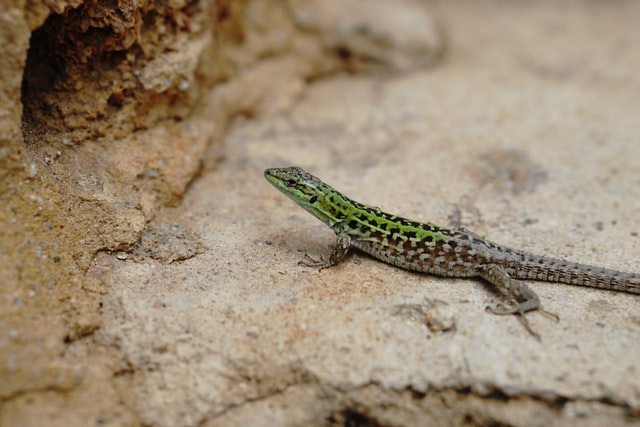
Evidence for a double mutualistic interaction between a lizard and a Mediterranean gymnosperm, Ephedra fragilis An increasing number of double mutualisms (i.e. two interact...
Conservation implications of asymmetricintrogression and reproductive barriers in a rare primrose species Primula is a large genus of flowering herbs well known for t...
No evidence that seed predators constrain pollinator‐mediated trait evolution in a tropical vine Turnover in biotic communities across heterogeneous landscap...
Anthropocene crisis: Climate change, pollinators, and food security In this paper, we propose a new approach—understood as a w...
Does body size predict the buzz‐pollination frequencies used by bees? Body size is an important trait linking pollinators and plan...
Environmental factors influencing fruit production and seed biology of the critically endangered Persoonia pauciflora (Proteaceae) Environmental factors influencing fruit production and seed ...
Mechanisms in mutualisms: A chemically mediated thrips pollination strategy in common elder The concept of flower-feeding thrips as pollinating insects ...