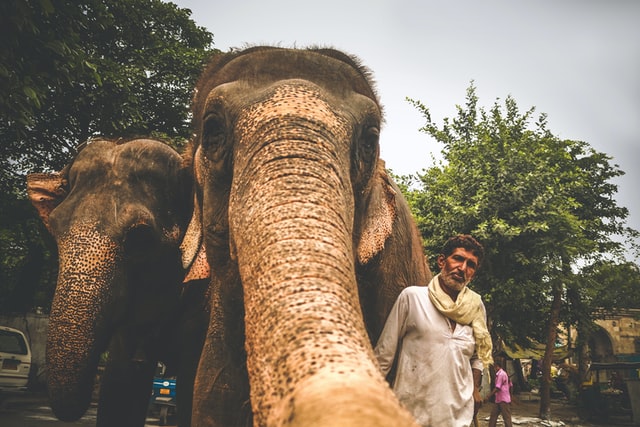
Human-elephant conflict in western Thailand: Socio-economic drivers and potential mitigation strategies Understanding human-wildlife conflict is an important first ...
Finance options and instruments for ecosystem-based adaptation y The report provides a comprehensive outlook on available f...
Good Practice Guidance SDG Indicator 15.3.1 Introduction: Good Practice Guidance for SDG Indicator 15.3....
A framework for assessing the effectiveness of ecosystem-based approaches to adaptation In Resilience: The Science of Adaptation to Climate Change l...
South Asia’s hotspots: Impacts of temperature and precipitation changes on living standards South Asia is highly vulnerable to climate change. Average t...
World atlas of desertification, 3rd edition Twenty years have passed since the last atlas of desertifica...
Land health surveillance and response: A framework for evidence-informed land management Abstract Degradation of land health – the capacity of the ...
Non-Native Megaherbivores: The Case for Novel Function to Manage Plant Invasions on Islands There is a heated debate about whether all non-native specie...
Harnessing ecological processes to facilitate coral restoration Incorporating ecological processes into restoration planning...
Involving society in restoration and conservation It is widely acknowledged that ecosystems often cannot be co...
Land-use change dynamics, soil type and species forming mono-dominant patches: The case of Pteridium aquilinumin a neotropical rain forest region Deforestation and agricultural land degradation in tropical ...
Europe is demolishing its dams to restore ecosystems The growing trend of dam removals calls for monitoring of en...