

From Invasive Alien Species to Asset: How Namibia is Making Nature’s Recovery Bankable
The principles of the IPBES Business and Biodiversity Assessment in practice, through community-based natural resource management
With an MSc in ecology and soil science from McGill University, Deniz Dutton specializes in climate-smart agricultural practices, the relationship between biodiversity and ecosystem services, and ecosystem stability. She is passionate about sharing this knowledge and interested in how policy can create an enabling environment for conservation, restoration and more sustainable land use, as well as how science can inform more effective and inclusive policies.
Previously, she interned at the Secretariat of the Convention on Biological Diversity, where she analysed national policies for alignment with the Kunming-Montreal Global Biodiversity Framework and contributed to the first global review of collective progress. In her current joint role with the United Nations Development Programme, she is coordinating a campaign between BIOFIN and BES-Net highlighting how the two initiatives collaborate to put the findings of the IPBES Business and Biodiversity Assessment into practice.
She is dedicated to advancing nature-based climate solutions and mainstreaming biodiversity into climate discourse while expanding her knowledge of innovative finance solutions for biodiversity conservation.
In Namibia’s driest regions, a deep-rooted invasive shrub called Prosopis juliflora has spent decades draining groundwater from already water-limited land.
For years, it was treated as many countries treat invasive species: as a cost, if it was addressed at all. Today, government-led efforts increasingly link its removal to productive uses of the cleared biomass, including charcoal, timber and animal feed, so that control and restoration can also generate economic value and livelihood opportunities. This is one example of a broader shift led by the Government of Namibia through the Ministry of Environment, Forestry and Tourism (MEFT), with support from two United Nations Development Programme (UNDP) initiatives, the Biodiversity and Ecosystem Services Network (BES-Net) and the Biodiversity Finance Initiative (BIOFIN).
This shift reflects a broader message. According to the Intergovernmental Science-Policy Platform on Biodiversity and Ecosystem Services (IPBES) Business and Biodiversity Assessment, all businesses depend on nature and share a responsibility to address their impacts on it. Businesses can also become agents of positive change by generating new financing for conservation or redirecting existing investment towards nature-positive activities. Doing so, however, requires engaging with both scientific knowledge and Indigenous and local knowledge, rather than treating them as alternatives.1
That principle sits at the heart of the UNDP Nature Pledge, UNDP’s commitment to placing nature at the centre of development because “without nature, we have nothing; without nature, we are nothing.” Poverty reduction, human rights and equity all depend on functioning ecosystems, yet the triple planetary crisis of climate change, biodiversity loss and pollution continues to erode the systems on which these ambitions depend. The Pledge calls for a shift in how nature is valued and in the policy and practice that follow, including human rights-based approaches, inclusive dialogue and support for the governance of Indigenous Peoples and local communities, which research shows can be more effective in protecting biodiversity than other governance models.
In Namibia’s driest regions, a deep-rooted invasive shrub called Prosopis juliflora has spent decades draining groundwater from already water-limited land.
For years, it was treated as many countries treat invasive species: as a cost, if it was addressed at all. Today, Government-led efforts increasingly link its removal to productive uses of the cleared biomass, including charcoal, timber and animal feed, so that control and restoration can also generate economic value and livelihood opportunities. This is one example of a broader shift led by the Government of Namibia through the Ministry of Environment, Forestry and Tourism (MEFT), with support from two United Nations Development Programme (UNDP) initiatives, the Biodiversity and Ecosystem Services Network (BES-Net) and the Biodiversity Finance Initiative (BIOFIN).
This shift reflects a broader message. According to the Intergovernmental Science-Policy Platform on Biodiversity and Ecosystem Services (IPBES) Business and Biodiversity Assessment, all businesses depend on nature and share a responsibility to address their impacts on it. Businesses can also become agents of positive change by generating new financing for conservation or redirecting existing investment towards nature-positive activities. Doing so, however, requires engaging with both scientific knowledge and Indigenous and local knowledge, rather than treating them as alternatives.1
That principle sits at the heart of the UNDP Nature Pledge, UNDP’s commitment to placing nature at the centre of development because “without nature, we have nothing; without nature, we are nothing.” Poverty reduction, human rights and equity all depend on functioning ecosystems, yet the triple planetary crisis of climate change, biodiversity loss and pollution continues to erode the systems on which these ambitions depend. The Pledge calls for a shift in how nature is valued and in the policy and practice that follow, including human rights-based approaches, inclusive dialogue and support for the governance of Indigenous Peoples and local communities, which research shows can be more effective in protecting biodiversity than other governance models.
In Namibia, these commitments are being put into practice through the BES Solution Fund, BES-Net’s catalytic seed fund for translating IPBES assessments into action on the ground, and through BIOFIN, which helps the Government move nature from an afterthought or a cost to be written off towards something valued directly in economic decision-making. “This is particularly relevant in Namibia, where agriculture, livestock production, fisheries, tourism, forestry, water supply, mining and many rural enterprises rely on functioning ecosystems,” said Hedwig Black, Programme Associate at UNDP Namibia. According to the Business and Biodiversity Assessment, methods, knowledge and data for measuring dependencies and impacts already exist, and businesses are better able to measure and manage their dependencies on nature when they draw on both scientific knowledge and Indigenous and local knowledge.1,2 In practical terms, BES-Net is strengthening the Government’s evidence base, institutional coordination and community-level action for invasive alien species management, while BIOFIN brings the financing perspective needed to connect restoration priorities with public, private and community investment.
These principles are reflected in Namibia’s long-running Community-Based Natural Resource Management programme, which Black described as “a strong national precedent for how community rights, local knowledge, scientific monitoring and recognized governance structures can reduce investment risk.” Indigenous and local knowledge holders often know with striking precision how ecosystems are changing and which practices have worked before. Bringing this knowledge along with scientific monitoring can make decisions “more locally relevant and more likely to be implemented,” Black said. In invasive alien species control specifically, communities can identify where the problem is spreading and when follow-up treatment is needed, helping build the local ownership needed to sustain control efforts.3 This also speaks to the Assessment’s seventh key message: methods and data for measuring impacts on nature already exist, and engaging scientists, Indigenous Peoples and local communities can improve their coverage, accuracy and relevance.4
“Indigenous and local knowledge holders often know with striking precision how ecosystems are changing and which practices have worked before.”
“Indigenous and local knowledge holders often know with striking precision how ecosystems are changing and which practices have worked before.”
These principles are reflected in Namibia’s long-running Community-Based Natural Resource Management programme, which Black described as “a strong national precedent for how community rights, local knowledge, scientific monitoring and recognized governance structures can reduce investment risk.” Indigenous and local knowledge holders often know with striking precision how ecosystems are changing and which practices have worked before. Bringing this knowledge along with scientific monitoring can make decisions “more locally relevant and more likely to be implemented,” Black said. In invasive alien species control specifically, communities can identify where the problem is spreading and when follow-up treatment is needed, helping build the local ownership needed to sustain control efforts.3 This also speaks to the Assessment’s seventh key message: methods and data for measuring impacts on nature already exist, and engaging scientists, Indigenous Peoples and local communities can improve their coverage, accuracy and relevance.4

Because restoration generates benefits beyond any single enterprise, community businesses should not be expected to fund invasive alien species control alone. In Namibia, the Government, through MEFT and the Prosopis Project Steering Committee, provides policy, technical and coordination leadership, while BES-Net supports evidence-based management and community-level action. Private-sector actors can contribute equipment, processing capacity, transport, technical expertise and off-take arrangements, helping create viable uses for biomass removed through control efforts. This is the “enabling environment” called for in the Assessment, one that incentivizes action benefiting business, biodiversity and society and enables businesses to fulfil their responsibility for their impacts on nature.5
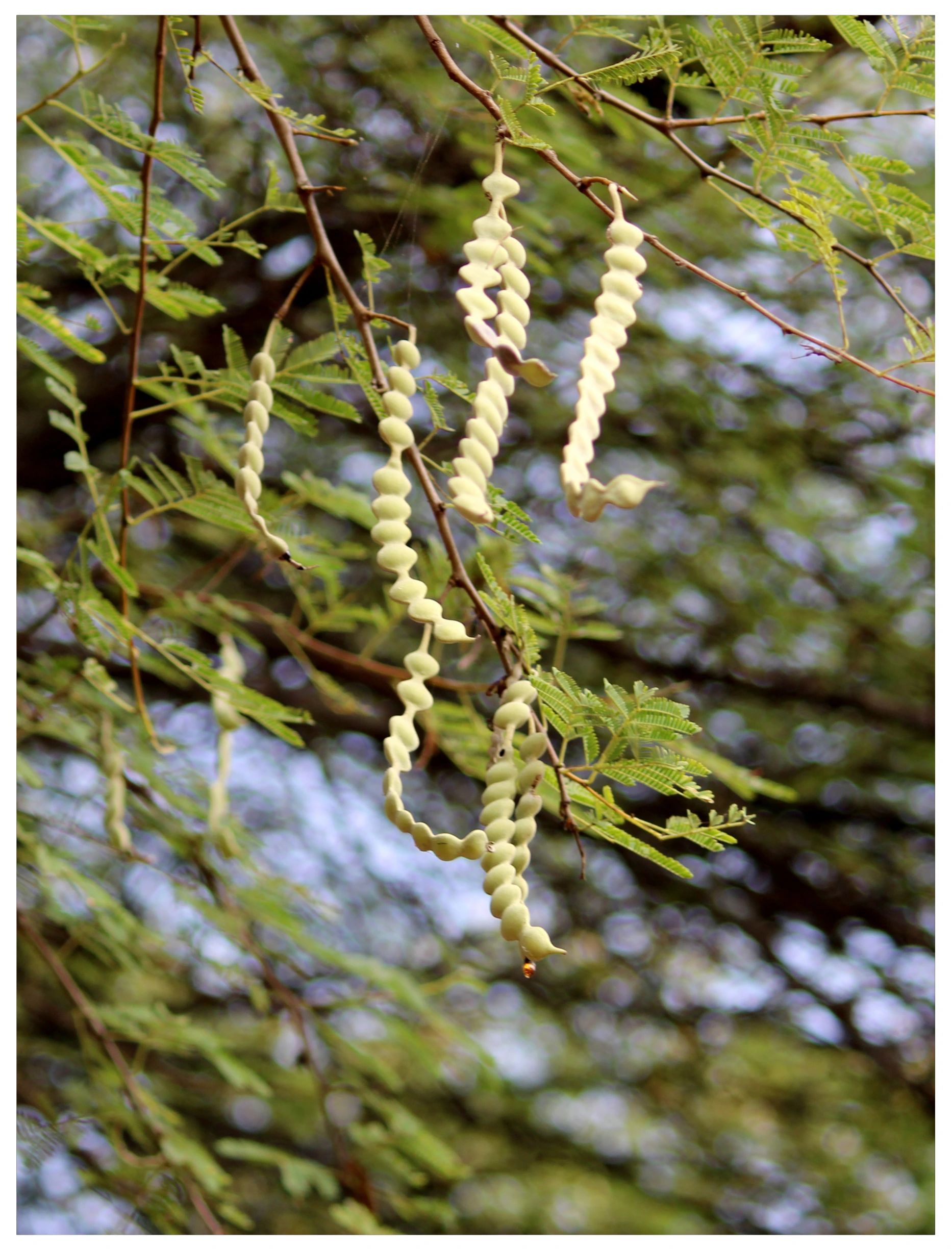
“Prosopis must be removed because it is an aggressive invasive alien species that destroys native vegetation and consumes large amounts of scarce groundwater, contributing to falling water tables. It also harms livestock and farming by forming dense thorny thickets that restrict access to grazing and water, while its thorns can injure animals and cause infections. These impacts carry economic costs for farmers, communities and the Government through reduced productivity, land degradation and repeated control costs. Through our collaboration with BES-Net and BIOFIN, Namibia is now better positioned to link Prosopis removal with ecosystem restoration, community livelihoods and viable uses of cleared biomass, while ensuring that the overriding objective remains control and ecosystem recovery,” said Johnson Ndokosho, Director of Forestry at MEFT.

Financing that enabling environment is where BIOFIN complements BES-Net. While BES-Net helps strengthen the evidence, coordination and practice needed for effective biodiversity action, BIOFIN helps the Government identify and structure financing solutions that can mobilize resources for restoration and nature-based enterprise. One emerging financing solution in Namibia, the Biodiversity Finance Facility, is being developed to channel finance towards projects aligned with national priorities, including ecosystem restoration, human-wildlife coexistence and nature-based enterprise. This creates a pathway through which evidence and priorities strengthened through BES-Net can inform future financing decisions. “BIOFIN has deliberately integrated insights from the recent assessment of business dependencies and impacts on biodiversity... to ensure emerging finance initiatives are informed by current evidence and reflect Namibia’s biodiversity priorities,” said Bernadette Shalumbu-Shivute, Sustainable Finance Specialist for BIOFIN at UNDP Namibia. This puts the Assessment’s third key message into practice: businesses can become agents of positive change when capital flows towards nature-positive activity, while reliable markets, not training alone, can help bio-enterprises such as Namibia’s Prosopis value chain endure.

Together, BES-Net and BIOFIN support the Government across a continuum from evidence to policy to finance. In the Prosopis context, this means using scientific knowledge and local knowledge to guide where and how control takes place, strengthening community participation in implementation and building the financing and market conditions needed to help sustain restoration beyond one-off clearing. This approach is consistent with the UNDP Nature Pledge’s emphasis on inclusive, locally grounded biodiversity action and on recognizing the important role of Indigenous Peoples and local communities in the stewardship of nature.6
By turning an invasive threat into an opportunity for restoration and local economic value, Namibia is demonstrating how Government leadership, community knowledge, business participation and biodiversity finance can work together while keeping the ecological objective clear: Prosopis utilization must support its control and removal, not create an incentive for its continued spread.7 In striking this balance, Namibia embodies both the Nature Pledge and the IPBES findings by placing nature at the heart of development, holding businesses accountable for their impacts while enabling them to act and shaping biodiversity investment with the knowledge of the people who understand these landscapes best.
 Built with Shorthand