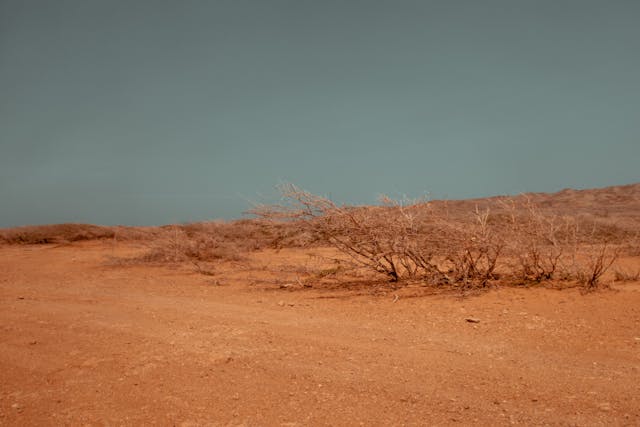
Urban expansion has demonstrated significant environmental impacts globally, particularly in developing countries, by altering ecosystems, threatening terrestrial lands, and reducing biodiversity. This rapid change disrupts urban infrastructure, fauna, and ecosystem services. Therefore, monitoring urban growth alone is not enough, but projecting the impacts of its patterns and trends on the terrestrial ecosystems should also be considered. In this study, the Random Forest (RFs), Multilayer Perceptron (MLP) technique, and Cellular Automata (CA) model have been adopted to predict urban growth patterns and their effects on barren land ecosystems in Kuwait over two decades. The RFs classifier categorised remotely sensed images (sentinel-2), producing a land use and land cover map for the study area. The findings revealed that the land-use/land-cover (LULC) map, with an accuracy of over 90 %, shows a rapid urban growth pattern in Kuwait, transforming 16,166 ha into built-up areas in the span of five years (2017–2022). The model predicts that large areas of barren land will be converted into built-up places, particularly in marginally urbanised zones in the northwest direction. Likewise, an enormous increase in urban expansion will occur along the southeast coasts and southern part of the country too. The predicted patterns of urban development, including densification and longitudinal spatial expansion, will significantly impact the urban biosphere and land ecosystems. Accordingly, the estimated urban expansion will likely cause significant destruction and fragmentation of the fragile natural habitats and ecosystems across desert land, particularly alluvial fans, dunes, valleys, ridges, and salt marshes. Our results have several vital implications and can assist decision-makers and planners in formulating sustainable urban strategies and environmental protection plans in arid and semi-arid regions.
Geospatial modelling of urban expansion effects on the land ecosystems in Kuwait using random forest and cellular automata
Year: 2025