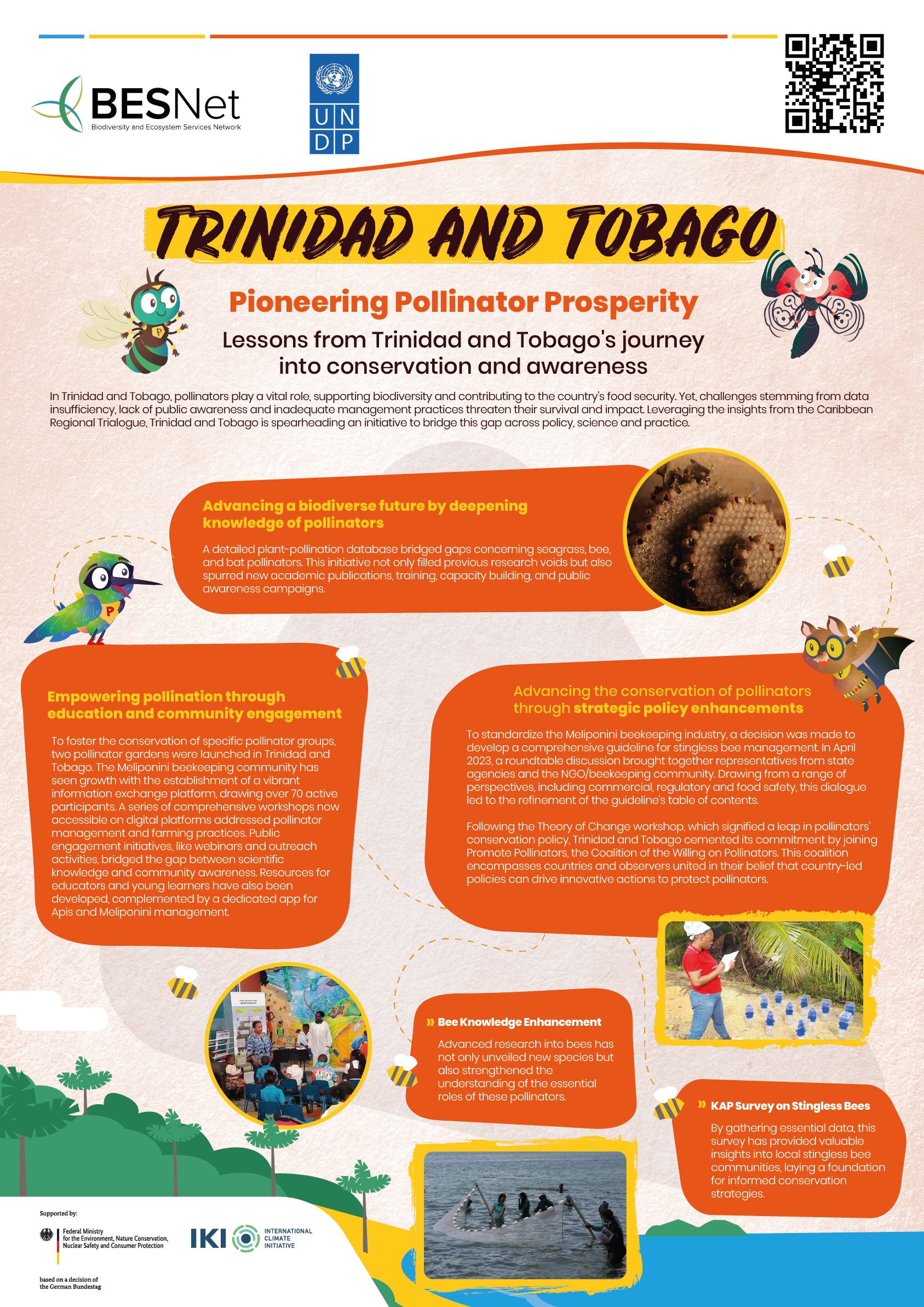
This Action Document presents the key messages and agreed sets of actions generated during the Second Caribbean Regional Trialogue: Integrated Approach to Sustainable Ecosystem Management held in Port of Spain, Trinidad and Tobago, from 2 to 4 December 2025. The Trialogue convened over 60 participants from seven Caribbean countries (Antigua and Barbuda, Cuba, Dominica, the Dominican Republic, Grenada, Guyana and Trinidad and Tobago), alongside stakeholders from key local, regional and global organizations. Participants included scientists, policymakers, practitioners and community representatives, reflecting the diversity of actors involved in sustainable ecosystem management across the region.
The Trialogue was convened by the Biodiversity and Ecosystem Services Network (BES-Net), a global initiative co-implemented by the United Nations Development Programme (UNDP) that works to strengthen dialogue between science, policy and practice in support of evidence-informed decision-making. BES-Net Trialogues are facilitated, multi-day dialogue processes designed to bring together diverse actors to collectively make sense of complex sustainability challenges and co-create actionable responses grounded in both scientific evidence and lived experience.
The event was designed to support participants in engaging with two major global assessments produced by the Intergovernmental Panel on Biodiversity and Ecosystem Services (IPBES): the Thematic Assessment Report on the Interlinkages among Biodiversity, Water, Food and Health (Nexus Assessment) and the Thematic Assessment Report on the Underlying Causes of Biodiversity Loss and the Determinants of Transformative Change and Options for Achieving the 2050 Vision for Biodiversity (Transformative Change Assessment, TCA), which explores how societies can address the underlying causes of biodiversity loss and move towards just and sustainable futures. Recognizing that such assessments can be technically complex, the Trialogue facilitation focused on translating their core concepts into practical entry points relevant to Caribbean socio-ecological contexts.